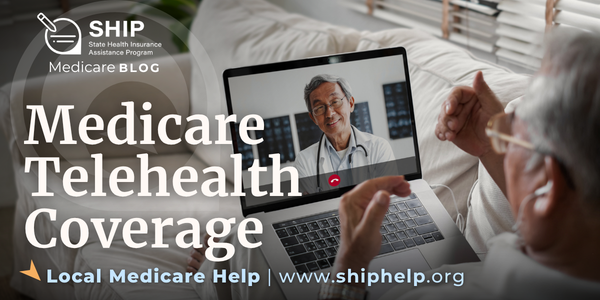
Medicare’s telehealth coverage has been expanded to allow more people to access care at home. Learn about what you can expect now and into the future with Medicare’s telehealth coverage.
First, what is telehealth?
Telehealth includes certain services that you receive from a health care provider outside of an in-person office visit. A telehealth service is a full visit with a provider using telephone or video technology that allows for both audio and video communication. It is different from a virtual check-in or health portal messages. Some examples of Medicare-covered telehealth benefits include lab test result consultations, prescription management, health screenings, and visits to evaluate urgent care issues like colds or coughs.
To understand what Medicare telehealth coverage is now, it’s helpful to know what telehealth coverage was like before the COVID-19 Public Health Emergency.
Medicare telehealth coverage was very limited. Telehealth services were generally only covered in rural areas. You would still have to go to a specific “originating site” to receive the telehealth. So, you probably couldn’t be at home getting telehealth. You’d likely have to go to a different medical office or clinic. Telehealth was generally only covered if it was provided via interactive, two-way audio and video technology. And it was limited to certain providers.
So what is telehealth coverage like now?
During the public health emergency and now after, telehealth coverage has been temporarily expanded to include more flexibilities and allow more people to receive care from their homes. This means telehealth services are covered for all beneficiaries in any geographic area, and you can receive these services in your own home. Also, any health care professional that is eligible to bill Medicare can provide and bill for telehealth services. This means you can access telehealth from more providers, like physical therapists or speech language pathologists. These flexibilities have been set to expire, but then extended, multiple times over the last few years. Most recently these flexibilities have been extended through December 31, 2027. So through 2027, telehealth services are covered for all beneficiaries in any geographic area (so not just in rural areas) at home in addition to health care settings. Telehealth could be delivered using audio only sometimes, so not audio and video. And it can be provided by any health care professional that is eligible to bill Medicare.
And what can we expect telehealth coverage to look like in the future?
Without further congressional action, after December 31, 2027, most telehealth services will again be more limited. But some flexibilities have been made permanent. Telehealth services will be still available regardless of geographic area for certain types of care, like behavioral/mental health care, monthly end-stage renal disease visits for home dialysis, diabetes self-management training, and Medicare nutrition therapy. Telehealth will still be able to be delivered using audio-only communication platforms for behavioral-mental health care. And other types of care will be subject to restrictions from before the public health emergency.
Finally, be alert to remote patient monitoring (RPM) scams.
RPM allows your doctor or health care provider to monitor parts of your health from your home. While telehealth connects patients and providers for virtual consultations, RPM provides continuous insights into a patient’s health status. They can use medical devices such as scales, glucose monitors, and blood pressure cuffs. When medically necessary and properly managed, remote patient monitoring can support ongoing care, help manage chronic conditions, and reduce the need for in-person visits.
However, not all remote patient monitoring offers are appropriate, medically necessary, or legitimate. Some companies may try to enroll you in services or send devices that are not medically necessary, not clearly explained, or billed without your full understanding or consent. These offers may come through phone calls, internet ads, or television promotions. To protect yourself, it’s important to confirm that any remote patient monitoring service is recommended by your trusted doctor or health care provider, and that you understand how it works and how it will be billed.
Look out for the following potential scam warning signs:
- You see charges on your Medicare statements for remote (physiologic or therapeutic) monitoring you didn’t need, get, or agree to.
- You are offered a “free” device, like a smartwatch to track your daily steps, in exchange for your Medicare number.
- Your doctor’s office calls to ask how you are doing and later, you notice they billed the phone call to Medicare as a remote patient monitoring service.
Companies may try to reach you over the phone or through internet or television ads. If you think you’ve experienced potential Medicare fraud, errors, or abuse, contact your Senior Medicare Patrol, or SMP.
Take these action steps:
- Speak with your doctor or other health care provider to learn about the telehealth and remote patient monitoring services they offer and if they may be appropriate for your health care needs.
- Contact your State Health Insurance Assistance Program (SHIP) if you have questions about Medicare’s telehealth coverage. Use our online SHIP Locator or call 877-839-2675 (and say “Medicare” when prompted) to find your local SHIP.
- Contact your SMP if you have experienced potential Medicare fraud, abuse, or errors. If you think you have experienced potential Medicare fraud, errors, or abuse contact your local Senior Medicare Patrol using the online SMP Locator or by calling 877-808-2468.
- Contact your Medicare Advantage plan if you have questions about its coverage and costs related to telehealth services.
Still have questions?
Your SHIP is here for you! You can contact your SHIP for any Medicare-related questions or concerns you have. SHIP counselors are government funded to provide trusted, unbiased Medicare counseling at no cost to you. (Depending on your state, your SHIP may go by another name.) Use our online SHIP Locator or call 877-839-2675 (and say “Medicare” when prompted) to find your local SHIP.
If you think you have experienced potential Medicare fraud, errors, or abuse contact your local Senior Medicare Patrol using the online SMP Locator or by calling 877-808-2468.