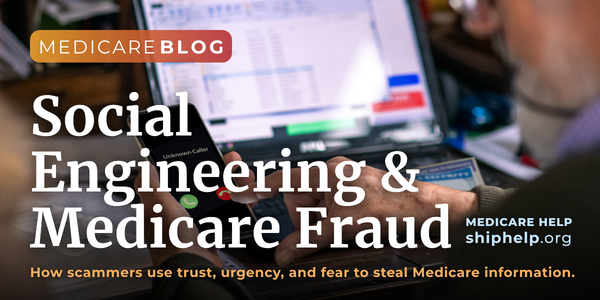
There are many ways that scammers can try and gain access to your personal and health information. Read on to learn about how social engineering techniques can be used in Medicare fraud schemes.
What is social engineering?
Social engineering is a tactic or strategy where someone tricks you into giving them your personal information that they can use to commit fraud. It is done by using a human element, or emotions like fear or trust, that can make people give out information. The scammer may use information they already know about you, like your name and address, to gain your trust. Once they have your trust, they try to get you to reveal more information, like your credit card number, Medicare number, Social Security number, and more. Scammers may contact you over the phone, through text message, or via email. They often use existing identity theft lists, social media, and other sources to learn about you before they get in touch.
How is social engineering used to commit Medicare fraud?
The health care industry is a big target for scammers, and this includes Medicare. Scammers can use social engineering tricks to get information from you, your health care provider, or your Medicare health or drug plan. They can use that information to make money by billing Medicare for services you did not receive. Some scammers may also pretend to represent a federal government agency. This is what is known as an imposter scam. Here are some examples of ways that social engineering has been used in Medicare fraud schemes:
- A beneficiary received a call from someone who already knew their name and address. The caller offered them a free back brace in return for their Medicare and Social Security numbers. They then followed up with a welcome letter that said they could get free orthotics, such as a knee brace.
- A beneficiary received a free genetic testing kit in the mail. The form was pre-filled with some personal information but asked the beneficiary to provide more personal and insurance information to get their test results.
How can I protect myself from potential fraud, waste, and abuse?
Being informed about how to spot and avoid scams is the best way to protect yourself from fraud and help save the Medicare program money. Here are some tips.
- Do not answer calls from unknown numbers.
- Be comfortable hanging up on a scammer. Consider having an exit line, like “My family member is on the other line. I need to hang up now.”
- Know that Medicare, Social Security, or other federal agencies will never call you to ask for your Medicare number, address, or other personal information. They already have it. Federal agencies will also never call you and tell you to move your money into a “federal locker” to keep it safe.
- Be wary of clicking on links in emails. If you get a strange email from a friend or family member, contact them directly to confirm if it is them.
- Be suspicious of offers for free items or services and people who use scare tactics or urgency to get you to provide your personal information or make a decision about your health care.
Still have questions?
Your Senior Medicare Patrol (SMP) is here for you! Contact your SMP if you think you have experienced potential Medicare fraud, errors, or abuse. An SMP representative will be able to help you identify what has happened and report any incidents to the proper authorities. To contact your SMP, use the online SMP Locator or call 877-808-2468.
If you get a call from someone pretending to represent the federal government or a business, report it at www.reportfraud.ftc.gov.
You can also contact your State Health Insurance Assistance Program (SHIP) for any Medicare-related questions or concerns you have. SHIP counselors are government funded to provide trusted, unbiased Medicare counseling at no cost to you. Depending on your state, your SHIP may go by another name.) Use our online SHIP Locator or call 877-839-2675 (and say “Medicare” when prompted) to find your local SHIP.